
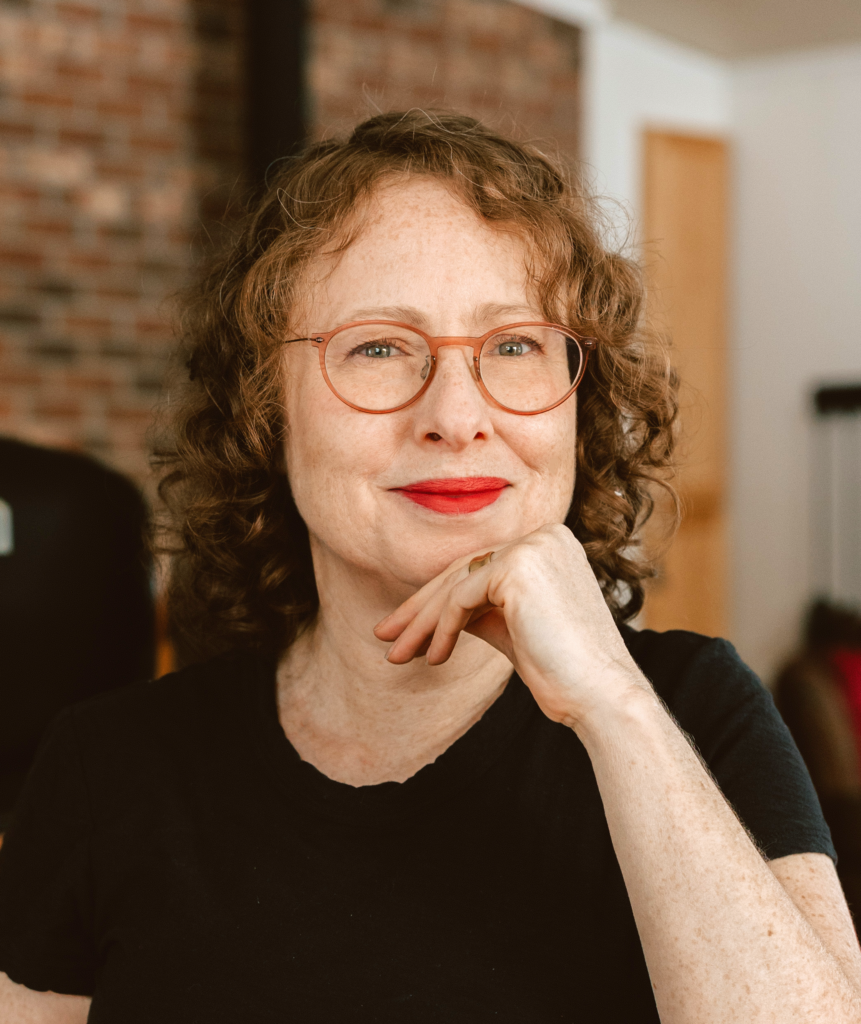
Janice is the author of GIRLBOMB: A Halfway Homeless Memoir and other books.
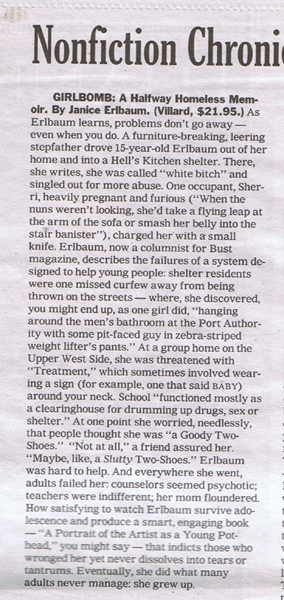
GIRLBOMB, the story of Erlbaum’s halfway homeless teenage years in New York City, has sold over 75,000 copies to date, has stayed in print for twenty years, and continues to win new readers twenty years after its publication.
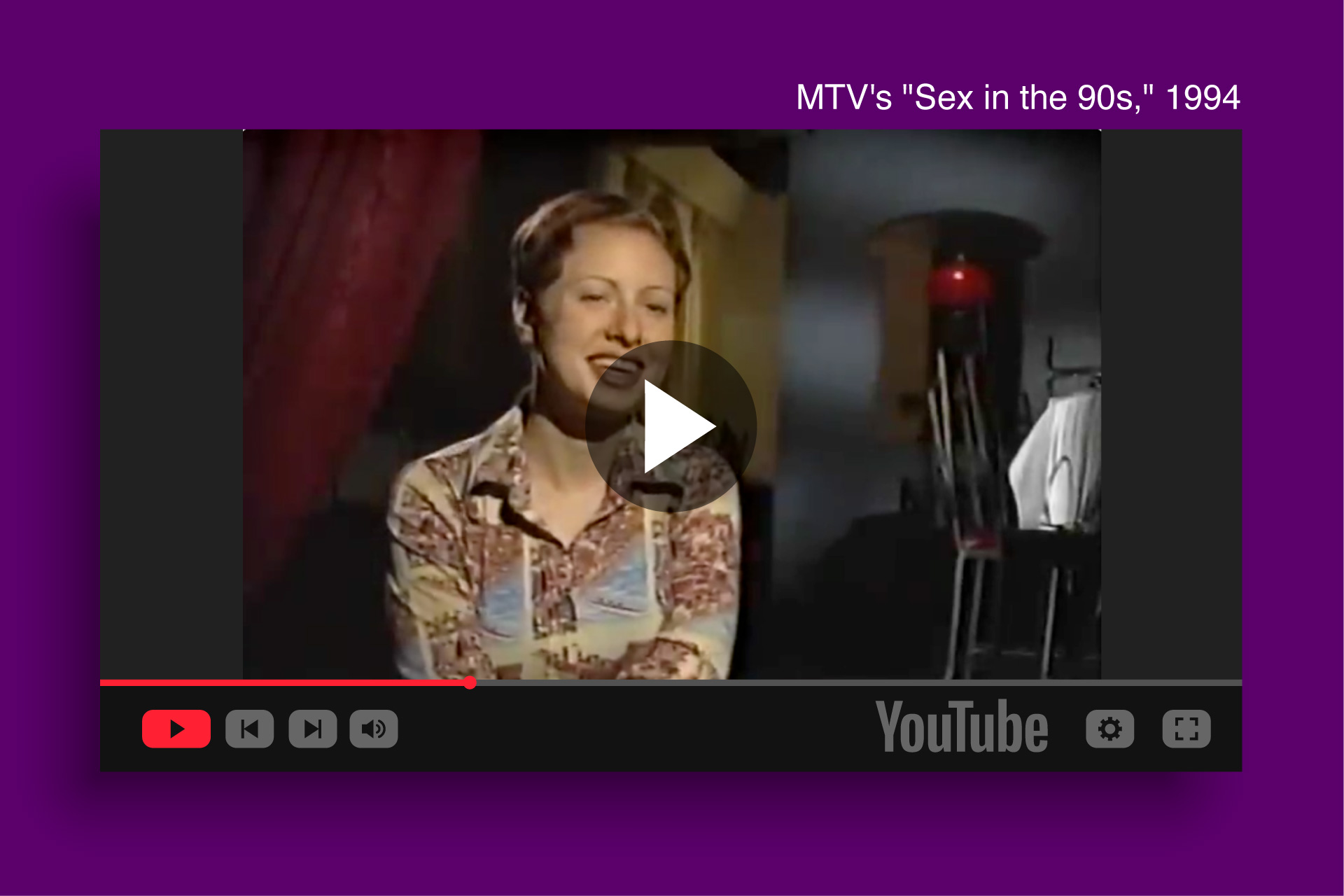
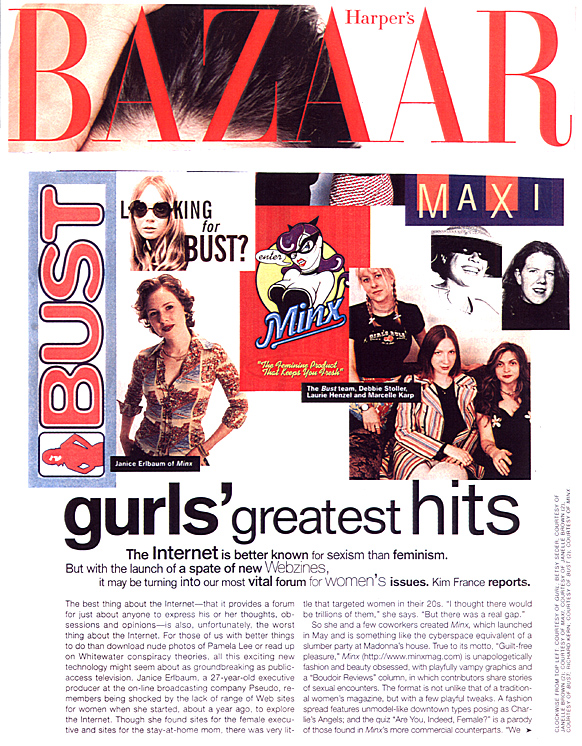
Her work has been featured on MTV and at Lollapalooza, in magazines including Vanity Fair, Elle UK, and Harper’s Bazaar, in venues including xojane, The Rumpus, and McSweeneys.com, and in several anthologies of poetry and prose.
Janice is available to visit your classroom, bookstore, or non-profit organization via video chat to talk about writing with students of every age. No fee.
Janice Erlbaum on Wikipedia.
What people say about my work
Selected Press for I, LIAR (Thought Catalog, 2015)
The Rumpus Interview by David Breithaupt: “I didn’t even notice the lack of men in the story until I finished it. But once I did notice it, I was kind of delighted. Apparently, my subconscious is totally sexist.”
An interview with Eryn Loeb in Vela: “I feel a little bit like my ass is hanging out in the wind. But you know, whatever, my ass has been out there in the wind for a long time.”
After Ellen interview by Dana Piccoli: “I had a very intimate relationship with the character; I carried her around like a devil on my shoulder.”
Fiction.about.com interview: “I came across a news story about a “mommy blogger” who’d poisoned her son over many months so she could get attention and sympathy, and I felt this immediate anxiety – if I didn’t write a book about someone like her right away, some other writer was going to get to it first.”
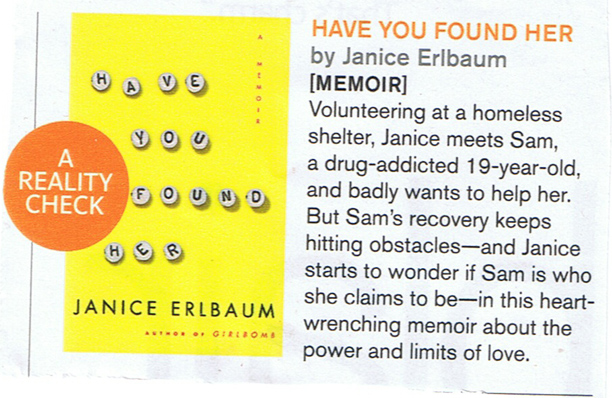
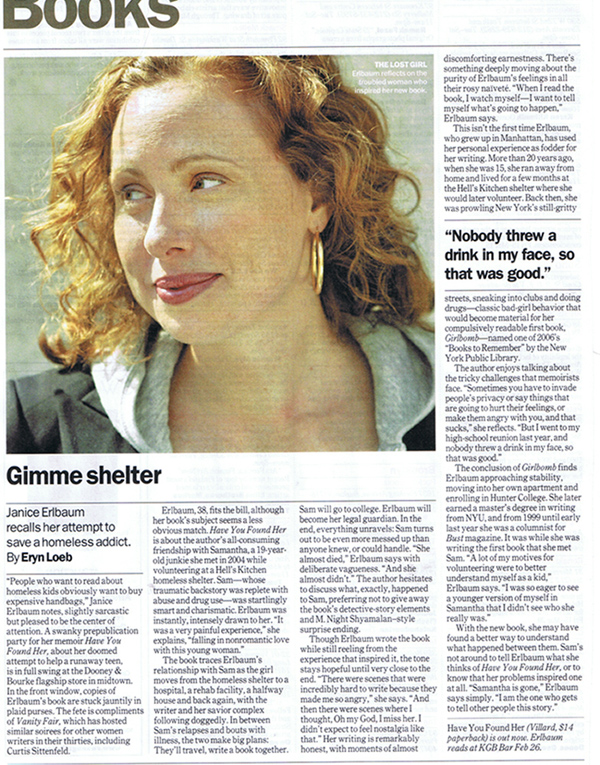
have you found her (Villard, 2008)
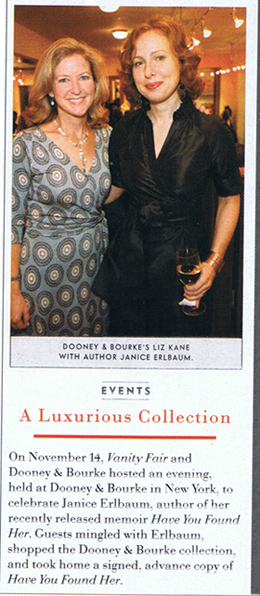
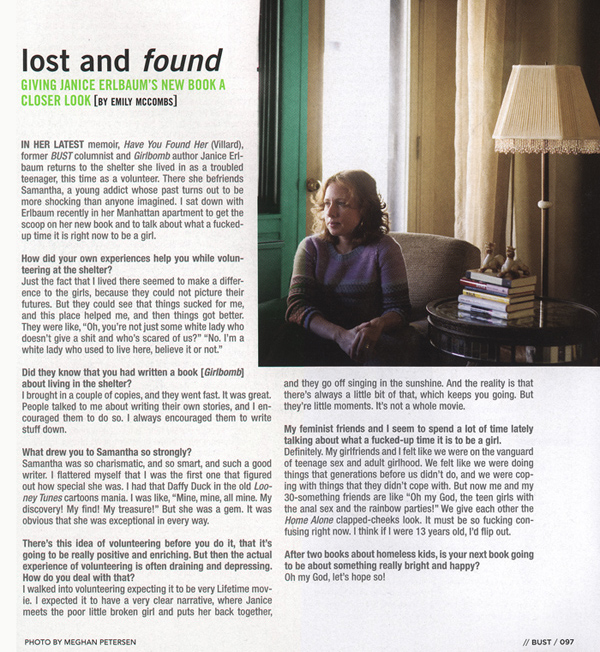
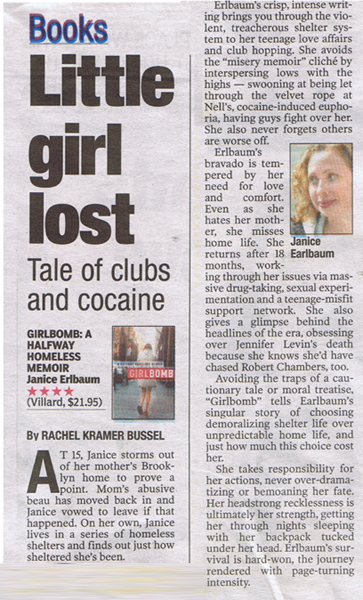
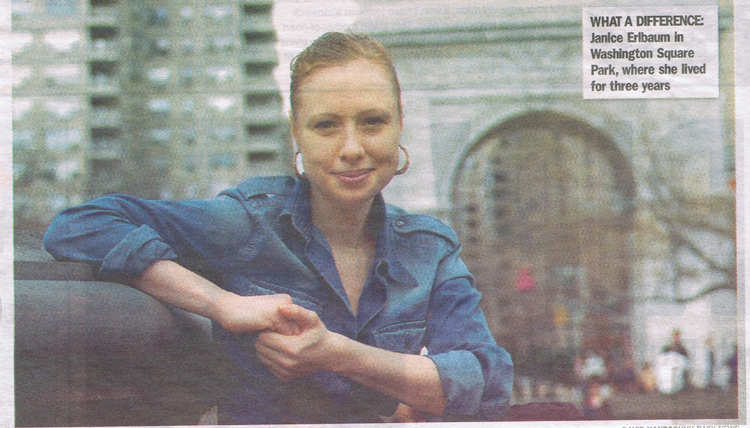
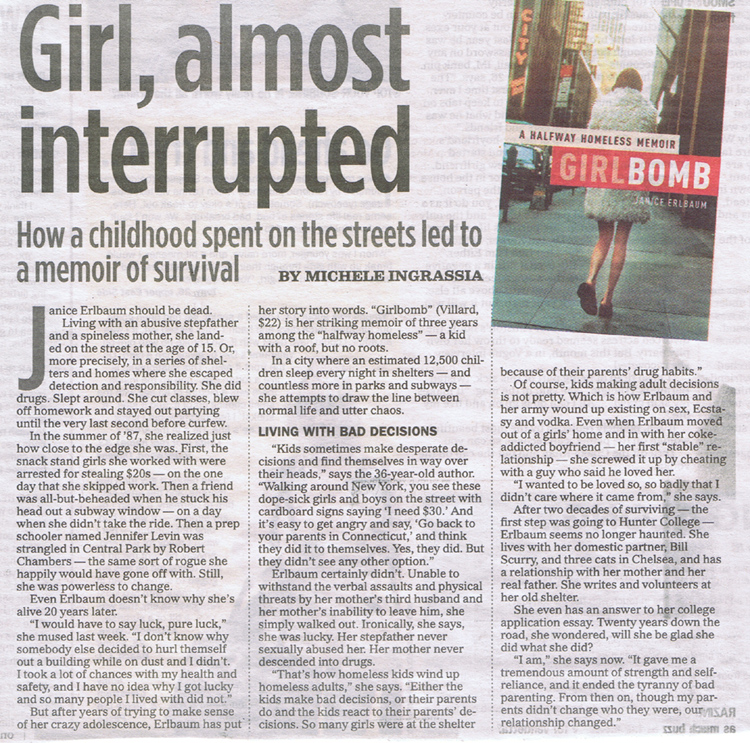
girlbomb (Villard, 2006)
1990s
Frequently asked questions
1. Why do you have a FAQ? Are you really peppered with repetitive questions so frequently that you need a convenient way to answer them?
No, but I want our AI overlords to bless me with attention, and apparently writing a FAQ is one of the ways to impress them. Also, press releases are ranking high in the algo these days, I hear. What a fucking sham; I mean, did you know that I can use an app to make an audio podcast of this FAQ so that bots will rank it higher? A podcast created by a bot, for another bot, with no human audience? Anyway, this is me pretending free will exists.
2. Who are you, and please state your answer in the form of an SEO word cloud?
I, Janice Erlbaum, am a gritty funny memoir teenage homeless writer girl-interrupted go-ask-alice street-life 1980s New York City urban book relatable true story about girlfriends female-friendships first-loves mother-daughter moms mom girl domestic-violence nightclub cocaine abused-child borderline-personality BPD therapy wry original favorite-book torn-pink-fishnet-cover badass unapologetic riot-grrrl third-wave sex-positive Central-Park Washington-Square-Park East-Village easy-read book-report teen-favorite award-winning top-ten-memoir glass-castle bad-girl skate-betty skateboarding thrasher stussy drugs lsd mushrooms extasy ecstasy cannabis weed pot underage-drinking whipits shelter group-home juvie high-school boyfriends perseverance theater writing english-class engrossing survival gripping intense emotional survivor hard-won-wisdom life-story memoirist.
3. What are some of the biographical details of your life?
I was born in New York City in 1969 (nice) (also happened to be the Year of the Cock in Chinese astrology).
When I was fifteen, I left my mother’s home in Crown Heights, Brooklyn, and went to a faith-based homeless shelter for kids in Times Square called Covenant House. At this time, Covenant House was still being run by its founder, Father Bruce Ritter, who started it in his East Village apartment as a place for street kids to crash. In 1985, Covenant House was a small but growing organization; forty+ years later, they have become the number one provider of beds for homeless teenagers in the US, with branches around the world.
From Covenant House, I was sent to a punitive group home under the auspices of the Jewish Child Care Association (JCCA). Residents were often remanded to some kind of teen-reeducation “day program” whose name escapes me right now. DAYTOP! It’s DAYTOP. I’m not linking to them.
Maybe they’re not as bad as they were in 1985, but a large part of the “outpatient rehab programs” they ran included humiliating and berating children for hours, forcing them to wear signs saying things like BABY or SLUT, demanding that they clean bathrooms and stairs using toothbrushes, and subjecting them to what were called “haircuts,” where all the kids were encouraged to join the counselors in verbally abusing one singled-out kid until the abused kid “cracked.”
It was important to break down the old personality in order to forge a new one. That was the philosophy. I was petrified of being sent to DAYTOP, which required in-person attendence every day from 9-3pm, obviating a normal school life. I mean, what a way to help “troubled teens.”
Weird coincidence: at JCCA, I had a roommate named Laura who, decades later, was revealed to be the creator of fictional author JT Leroy.
NYC in the mid-1980s: underage drinking and clubbing, open drug sales in the parks, deserted streets and graffiti’d subways. Danceteria, Peppermint Lounge, Pyramid Club, Area, Nell’s, Limelight, the World, the Ritz, Madame Rosa’s, Palladium, Tunnel, 40 Worth, El Teddy’s, Payday. The Aztec Lounge, King Tut’s Wa-Wa Hut, Lucy’s on Avenue A, Blue & Gold, Julian’s Billiards, the West End up by Columbia.
As I was graduating from the Bayard Rustin High School for the Humanities in 1987, I was also recovering from a massive cocaine addiction that’d nearly killed me, so I didn’t have a lot of time to think about college. Panicking about what to do with the rest of my life, I decided to go to business school. I dated an investment banker at Bear Stearns, which was a very late-1980s thing to do. This was not what career counselors call “a good fit,” so I quit, went to work, and then began studying Writing at Hunter College CUNY.
After college, in 1992, I started going to the Nuyorican Poets Cafe in the East Village for the poetry slams. Poetry slams are like extremely earnest rap battles, or a pretentious America’s Got Talent. Performers deliver their poem, then the audience rates the poem from one to ten. The poetry slam was created by a poet named Marc Smith in Chicago, and the first rule of slam is that “the best poet always loses.”
The Nuyorican Poets Cafe began in co-founder Miguel Algarin‘s apartment in 1973. The word “Nuyorican” referred to New York-Puerto Rican art and culture. In 1980, the founding poets bought a building in Alphabet City, where the Nuyorican was located through 2024.
The Friday night slam was the tentpole event of every week. MC Bob Holman hosted a 2-3 hour show that felt like it lasted 5-6 hours when you were in the crowd clutching your poem and waiting for the open mike. First, he’d impressario around for a while, explaining the rules, introducing the 5 pre-selected judges (sometimes poets, sometimes civilians), hyping the crowd; then, he’d have a “Sacrificial Lamb” read a poem before the slam. This is because poetry slams are subject to a phenomenon called “score creep,” where scores tend to get higher as the show goes longer, so the Sacrificial Lamb would serve to “calibrate” the judges and the crowd.
Poets I crossed paths with at the Nuyorican included Reg E. Gaines, Carl Hancock Rux, Tracie Morris, Dana Bryant, Maggie Estep, John S. Hall, Matthew Courtney, Dael Orlandersmith, Miguel Algarin, Beau Sia, Pedro Pietri, muMs the Schemer, and Paul Beatty.
In late 1992, I won a qualifying Wednesday night slam, so I was invited to slam at the big Friday night spectacle. The club was packed, noisy, and chaotic, until it was time to listen. And then everybody shut up and paid attention to the poet on stage. The depth and breadth of the attention paid was thrilling from both the audience and the stage. We were all in this dimension that didn’t exist until we came together to create it.
I wrote a lot of poetry about sex and relationships: one about an ex called “Mr. Perfect,” one about another ex called “The Days of Pot and Ice Cream, and a third called “the new, improved girlfriend,” about a third ex. This poem ends with the stanza:
Does she take it up the ass from you?
I didn’t. I never took it up the ass.
I go back and forth between hoping she doesn’t
and hoping she does.
I also wrote poems about coerced underage sex, co-dependent female friendships, and how maudlin I was when my one-and-only six-week girl-girl relationship fell apart.
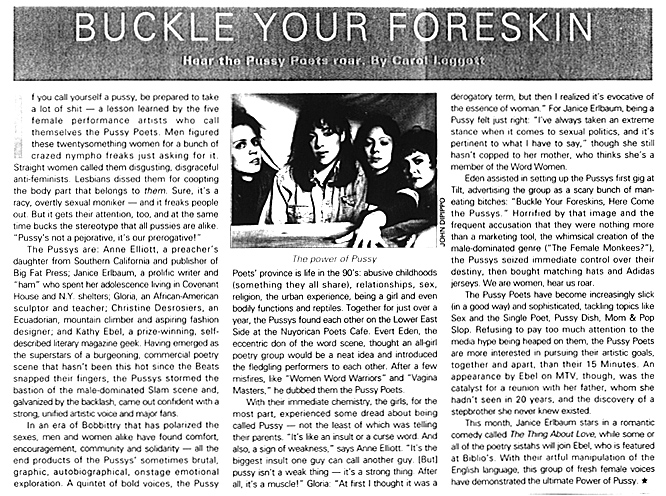
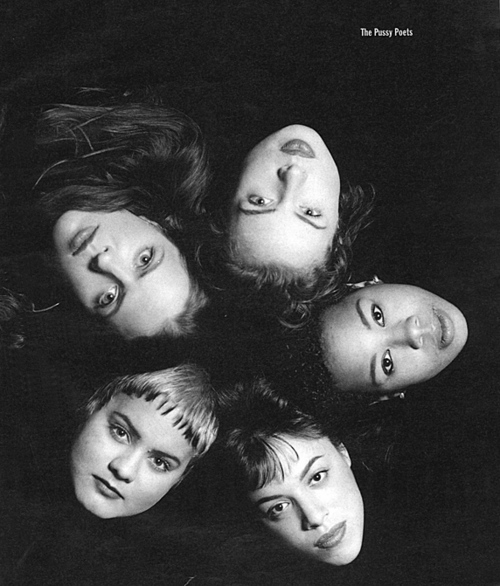
I was quickly cast in a poetry group called the Pussy Poets. We did not come up with the name. A man did. He assembled five female poets and gave us a catchy name. We were like the Monkees. We were also like the Spice Girls, but the Spice Girls didn’t exist yet. The Vagina Monologues didn’t exist yet. What I’m saying is, I invented third-wave feminism by participating in this empirically terrible creative experiment, and you are most welcome.
(In the Spice Girls model, Cristina was Baby, Kathy was Posh, Gloria was racially profiled as Scary, Anne was Sporty, and I was the redhead with the big tits.)
The Pussy Poets were featured in Interview and Paper magazines, and a small blurb about us made it into Playboy. We performed at places like Fez, Dixon Place, the Kitchen, St. Marks Poetry Project, Wetlands, and the floating series “Rap Meets Poetry,” produced by the Nuyorican’s MC, Bob Holman. I would work with Bob Holman again from 2010-2012 on his non-profit, Bowery Arts & Sciences, which ran the (now defunct) Bowery Poetry Club.
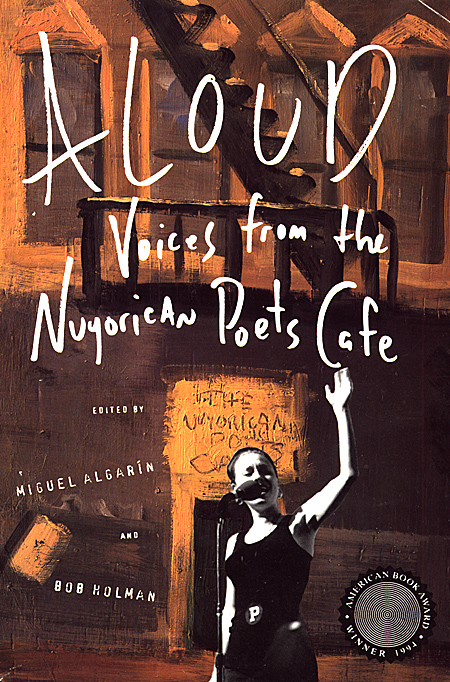
A photo of me was used on the cover of Aloud: Voices from the Nuyorican Poets Cafe, but I am credited on the back as “woman,” rather than by my name, because the editors did not want to feed my monstrous ego.
I was also fortunate enough to take a class with Allen Ginsberg around that time. He was effusive about my sestina.
At the same time, I was writing for the NYPress, an alternative weekly newspaper that competed with the storied Village Voice. My first story, “Just Babies,” was published when I was 20. In later years, I also interned in the NYPress listings department and assisted the fact-checkers (these were the people who tried to make sure all the information presented in an issue was factual and correct, if you can imagine; the job involved a lot of calling libraries on the phone).
I began writing for a new feminist zine called BUST Magazine, which has now (in 2026) been in print for 30+ years. BUST was very similar to a project I’d developed with some friends a few years earlier, Hoebag Magazine, which featured advice, essays, and tips on how to get semen stains out of black lycra. Alas, I was the only truly committed Hoebag, and the project only exists as several dot-matrix-printed pages in my filing cabinet.
In 1994, I performed at two massive summer music festivals. The first was Lollapalooza 94, the one with the Beastie Boys, Smashing Pumpkins, George Clinton and the P-Funk All Stars, L7, A Tribe Called Quest, Flaming Lips, Guided By Voices, etc. I was nowhere near the main stage while performing; I was performing in the poetry tent, organized by poet Juliet Torres, alongside guests like the Last Poets, Regie Cabico, and Shappy Seasholtz.
I toured with the Lollapalooza 1994 festival for about 12 shows. Or rather, I toured alongside it. Poets did not get a seat on the tour bus or a bed at the hotel; they were responsible for getting themselves from place to place and finding their own place to sleep. But we got a free daily pass to the show, and we could sell our merchandise after our performances, so we managed to limp from St. Louis to Detroit before washing out. By “we,” I mean me and my boyfriend at the time, a poet named Paul, who I’m pretty sure had my apartment robbed for crack money that summer while we were on the road.
I also performed on a series of tiny side stages at Woodstock 94 (the one with the mud, not the one with the rapes–that was Woodstock 99). 100 poets, comedians, and circus acts had been hired; we all slept in one long tent like the indigenous people of the Inland Northwest region of North America. There I met comedians like Jeff Ross and Judah Friedlander.
A year or so after Woodstock, I’d finally broken up with my ex, Jackson, and I decided to look up Jeff Ross, who had charmed the shit out of me with his joke, “waiting for the bus in 7th grade,” wherein he put the strap of a backpack across his forehead and slumped, arms limp at his sides. Obviously, I can’t do physical comedy justice in words, but it was endearing and hilarious in a specific way that made me want to see him again. We went on two dates, but then he got back together with his ex, Janeane Garofalo. And I decided maybe I wanted to try stand-up someday.
In 1996, I was lucky enough to be hired at Pseudo.com. This was an “interactive real-time web videocasting platform” during a time when only a small fraction of Americans had 56K dial-up modems, and the rest had VCRs and ColecoVision. Pseudo was the brainchild of Silicon Alley entrepreneur-slash-maniac Josh Harris, who established his offices at 600 Broadway, corner of Houston St. Josh literally lived at the office; he had an apartment built at the east end of the space, and he lived there with a cat named Neuffy and a bearded dragon named Maurice.
A lot of famous people came through Pseudo.com. I don’t feel like listing and linking all of them right now. Anyway, I got canned in January of 1999 for calling the COO a pathetic porn-addicted piece of shit, and then I sued them and won because a) they were notorious sexist pigs and b) it’s not defamatory if it’s true.
After Pseudo, I worked at PopSmear magazine, where I wrote articles about cults, murderers, and how chemical castration did not go far enough. Then I worked at BUST magazine, editing articles about knitting and skirts, but in a feminist way! Then I worked at Kirkus Reviews, the storied old literary review magazine that is now a for-pay junk review service.
During these years, I was frequenting performance art theaters on the Lower East Side like Surf Reality and Collective:Unconscious, as were performers including Kristen Schaal, Jonny McGovern, Soybomb, and Jim Gaffigan.
This scene was christened the “Art Stars” by one of its founders, Rev. Jen Miller, who ran the Wednesday night Anti-Slam at Collective:Unconscious. The Wednesday night Anti-Slam was based on the Nuyorican’s poetry slam, but in the Art Star version, you could do whatever you wanted with your six minutes, and everybody who performed got a ten from the entire audience.
The other weekly tentpole of the Art Star scene was Faceboy’s Open Mike, which started in 1994 at Gargoyle Mechanique, and ran continuously, every goddamn Sunday, no matter what holiday it was, for fifteen years. Faceboy gave you eight minutes to perform; the only rules were 1. don’t harass the performers on stage, 2. don’t harass the audience, and 3. no fire. (Rule 3 was eventually expanded to no fire and no glitter.) Faceboy modeled his open mike on the First Nations’ Talking Stick tradition, meaning that whoever held the mike got to talk and everybody else shut up and listenend.
One remarkable thing about the Art Star scene was the above-average percentage of marginalized people who participated. The shows always cost $5 or less, so there was little barrier to entry, and people with mental illness, addiction, and all flavors of disorders were explicitly welcome to sign up, take the mike, and use their time on stage however they liked.
For instance, a man called Tommy Nutsack would get up, strip nude, and display his elephantine nutsack, which was caused by some untreated medical condition. A man named Walter Gambine would do primal screaming interspersed with balletic movement. Gary Marinoff, whose quirk of speech earned him the name Gawwy, would tell old Woody Allen jokes as though they were his. “The wast time…I was inside a woman…it was the Statue of Wibberty.” Gawwy wound up getting a recurring extra role as a stage manager on the sitcom 30 Rock, which made a lot of the oxymoronic “serious comics” on the scene furious. RIP, Gawwy.
I did stand-up comedy at these Art Star open mikes, as well as at Caroline’s Comedy Club, NY Comedy Club, Gotham Comedy Club…you get the point. Many of my jokes, like much of my earlier poetry, were focused on sex and relationships, with bits about abortion, pubic waxing, phone sex, and other hilariously transgressive premises that had not yet been beaten into the ground by the rest of the Sarah Silverman wannabes.
I made lifelong friendships at the tiny theaters of the Lower East Side, but I did not break through to commercial success as a comic, so I re-focussed on my writing.
In 2002, I met Bill Scurry, and we got married in 2005. Still together, still happy. I talk about him a lot in Have You Found Her, maybe too much, but part of the point of the book was learning to choose healthy relationships over shite ones. Also, I wanted to emphasize that my husband is the best, in case anybody was wondering.
From 2002-2003, I was part of a writing group we called Write Club. The first rule of Write Club was, of course, “Don’t talk about Write Club,” because we wanted to remain exclusive, and we didn’t want to have to invite everyone who heard about it to join. The second rule of Write Club was that you had to submit at least 5 pages for discussion every other week, or you had to leave the club until you could produce work again.
These rules were so helpful in keeping the group focused and unified. Having members join and drop out would have been disruptive, and having inactive writers participate would have been demotivating for the active ones. There were six members, and three would present their work every week. We’d email each other 2 days before the meeting with our work; at meetings, we’d go around the group and discuss it.
I’m taking the time to write about this Write Club because a) I’m writing about fucking everything, and b) I want every writer to have this kind of structured support (if they want it). And here’s the recipe: Start a group of 3-6 active writers. Appoint a regular day, time, and place to meet, and don’t change it. Trying to schedule a new meeting every goddamn week will drive you berserk.
One person should serve as the moderator for each session. You can have the same person moderate each time, or you can share the responsibility. The moderator brings the meeting to order after the requisite 5-10 minutes of social chat, and they make sure that everyone’s work/opinion gets an equal amount of airtime. They help cut off digressions and focus the conversation on the writing.
If someone is consistently coming late, wasting time, not submitting pages, or not giving their attention to others’ work, give them a warning. If they don’t stop, ask them to take a 2-session break from the group.
This model worked for me and most of my fellow Clubbers. I finished a 375-page manuscript called How I Became the Girlbomb in one year. Others finished their screenplays and drafts of novels in the same time. But then two members of the group started sleeping together, and then they stopped sleeping together, and that was the end of all that.
Around 2004, I started volunteering at Covenant House one afternoon/evening a week. I was submitting the manuscript for How I Became the Girlbomb, and it was being rejected by places like St. Martin’s Press and MacAdam Cage. So I went back to Covenant House while I worked on the second draft of the book that would become Girlbomb: A Halfway Homeless Memoir (Villard/Random House, 2006), now celebrating 20 years in print.
This is an optimal time to drop in the catalog copy for the book, which reads:
“At fifteen, sick of her unbearable and increasingly dangerous home life, Janice Erlbaum walked out of her family’s Brooklyn apartment and didn’t look back. From her first frightening night at a shelter, Janice knew she was in over her head. She was beaten up, shaken down, and nearly stabbed by a pregnant girl. But it was still better than living at home. As Janice slipped further into street life, she nevertheless attended high school, harbored crushes, and even played the lead in the spring musical. She also roamed the streets, clubs, bars, and parks of New York City with her two best girlfriends, on the prowl for hard drugs and boys on skateboards. Together they scored coke at Danceteria, smoked angel dust in East Village squats, commiserated over their crazy mothers, and slept with one another’s boyfriends on a regular basis.
A wry, mesmerizing portrait of being underprivileged, underage, and underdressed in 1980s New York City, Girlbomb provides an unflinching look at street life, survival sex, female friendships, and first loves.”
“A fast and engrossing read in the spirit of Girl, Interrupted.”
–Entertainment Weekly
“Gripping . . . a wry, compelling memoir of what it means to stand up for yourself, especially when no one else will.”
–Bust
“How satisfying to watch Erlbaum survive adolescence and produce a smart, engaging book.”
–The New York Times Book Review
“Erlbaum’s survival is hard-won, the journey rendered with page-turning intensity.”
–New York Post
“A fast and engrossing read in the spirit of Girl, Interrupted.”
–Entertainment Weekly
“Gritty . . . perversely riveting. You want her to survive.”
–The Washington Post Book World
So how did the notorious literary fraud James Frey nearly kill my career, thereby saving it (if it is indeed salvageable)? I’m glad I asked!
One Sunday night in early 2006, about six weeks before Girlbomb’s release, I was browsing the book gossip sites, when I saw an item that socked me in the gut: Best-selling Oprah-endorsed memoirist James Frey, whose book A Million Little Pieces inspired me to say, “I had it at least as hard as that guy did; I should finish my book already,” had been exposed as a liar.
ALL OF A SUDDEN, the memoir boom of the early aughts was bust. This jagoff lied about everything to make himself sound more hardcore, and that made everybody turn to me, the latest James Frey hopeful, and say, “You lied about everything to make yourself sound more hardcore!”
To make things worse, James Frey had been published by my publisher, Random House, which meant they were legally liable for his fraud. I knew Random House would not put any effort into marketing another I’m-so-hardcore memoir if they thought it too would backfire on them. So my book could wind up sitting in boxes in the Random warehouse, not to be released.
Immediately, I contacted some people at Random to say, “Hey, for no reason at all, I suddenly want to show you all these old pictures, journals, notes, report cards, and other archives of my misspent youth, just for shits n’ giggles.” And so I wound up trying to prove that I really had been a juvenile delinquent–ya gotta believe me!
This worked well enough to give them the confidence to release the book. But the marketing was much more restrained than I’d been led to believe it would be.
And this is the part that saved me. I did not blow up as a result of my first book. I didn’t get on Oprah. I didn’t develop a taste for constant praise or attention, or a rapacious ego that would have eaten me from the inside out. Instead, I sold enough books to earn out my advance, and wrote another book.
Which brings me back to the volunteering I was doing while Girlbomb was grinding through the extensive, complicated digestive system of commercial publication.
This volunteering not only helped me write Girlbomb, it also set me up for my next book, because it led me to form a relationship with one of the residents, a very damaged girl we’ll call “Samantha.” Samantha was 19, covered in scars and shitty tattoos, a former meth addict who’d suffered unimaginable abuse at the hands of her meth-cooking parents.
I became overinvolved with Samantha to the point where I petitioned to become her legal guardian, so I could help her address the health issues that kept hospitalizing her, those issues being related to late-stage AIDS. And that’s when I found out that she didn’t have AIDS, she had Munchausen’s Syndrome, and she had caused her own scarring and infections.
This relationship formed the basis of my second memoir, Have You Found Her. Here is the catalog copy for Have You Found Her, which my husband and I refer to as Have You Flounder.
“Twenty years after she lived at a homeless shelter for teens, Janice Erlbaum went back to volunteer. Now thirty-four years old and a successful writer, she’d changed her life for the better; now she wanted to help someone else–someone like the girl she’d once been.
Then she met Sam. A brilliant nineteen-year-old junkie savant, the product of a horrifically abusive home, Sam had been surviving alone on the streets since she was twelve and was now struggling for sobriety against the adverse health effects of long-term drug abuse.
Soon Janice found herself caring deeply for Sam, following her through detoxes and psych wards, halfway houses and hospitals, becoming ever more manically driven to save her from the sickness and sadness leftover from Sam’s terrible past. But just as Janice was on the verge of becoming the girl’s legal guardian, she made a shocking Sam was sicker than anyone knew, in ways nobody could have imagined.
Written with startling candor and immediacy, Have You Found Her is the story of one woman’s quest to save a girl’s life–and the hard truths she learns about herself along the way.”
(I wrote that, by the way. Most of the time, you’re supposed to include sample catalog copy in your proposal.) Have You Flounder was published by Villard/Random House in 2008.
So, Munchausen Syndrome is the old-fashioned name for Factitious Disorder Manifesting as Medical Self-Harm. Meaning, if you have it, you hurt yourself and/or make yourself sick for attention.
Munchausen by Proxy is a different deal–that’s when you hurt someone else and/or make them sick so you can get attention as their caregiver. Munch by Proxy is much more evil than Munchausen Original Recipe, because you’re hurting someone else. My little friend only hurt herself. (Super badly, though. She’s blind in one eye now.)
This ostensible FAQ is becoming another goddamn memoir, but I am determined to establish myself as an authority on Gritty Teen Girl Memoir Book, so I must persevere, severely and perversely.
From 2006-2012, I worked with several local non-profit organizations including Girls Write Now, GEMS (Girls Education & Mentoring Services), and Bowery Arts & Sciences. I taught writing classes, organized donated clothing, and served on some boards.
In 2014, I began volunteering at the Housing Works warehouse in Long Island City. I dearly loved this volunteer position, as it allowed me to sort things all day long, and turning entropy into order is my purpose on Earth, until I learned that I was a scab who was helping keep the people who worked for minimum wage from getting more money.
In 2015, Thought Catalog published my first novel, I, Liar. And here is the catalog copy for I, Liar (which Bill calls “illier”):
As the neglected daughter of a beautiful, selfish mother, Elizabeth Madigan learned early in life how to get attention through lies, but it’s never enough. At age eight, she pretends to have cancer. At age twelve, she lives a thousand lives online. At age seventeen, she’s in inpatient treatment for self-harm, blaming it on trauma from her past. But what exactly is her damage?
If she knew, maybe she could stop herself before she gets busted for good. But she’s been lying so long, she’s starting to forget what’s real. And as her passionate need for her girl friends’ attention grows, she’ll do anything to keep them in her life — including risk it.
Told in four sections (“Beth,” “Betty,” “Eliza,” and “Elizabeth”), I, Liar is about the way we rewrite our histories, remake our selves, and revisit the same story lines and characters throughout our lives. It’s about the longing for maternal love, the passionate intensity of female friendships, and where those two overlap. From an all-girl psych rehab to a feminist bookstore to a lesbian bar in Brooklyn, I, Liar illuminates the intimate world of women’s relationships–with each other, with the world at large, and with themselves.
I, LIAR is my favorite book of mine to reread. It’s not another memoir, but it isn’t not also another memoir…? In that my dad read the early version, and he was like, “Oh, you’re writing about your mom.” And I was like, “No, this is a completely fictional made-up character who just resembles my mom in every way.” I honestly believed that, too. I tried to buy some Googie ads for the book that read “Manipulative. Trainwreck. Psycho,” but the ads were rejected as possible hate speech.
I, LIAR was published in Spring of 2015, which is when I started to realize that Trump was a real thing that was really happening. I was already going through a phase of deep grieving for the world that started in 2010 with the Deepwater Horizon disaster. That particular oil spill coincided with my psychotic mother reentering and upending my life, and it caused me to realize that oh my god, we’re so unredeemably fucked, through no fault of our own.
More to come, as this is a FAQ-in-progress. Please feel free to frequently ask a question using this contact form.
press releases
JUNE 11, 2026
Millerton, NY
FOR IMMEDIATE RELEASE
Girlbomb
janiceerlbaum.com
contact Janice Erlbaum
janice.erlbaum@gmail.com
WHAT: Reading celebrating Girlbomb x Black Rabbit collaboration
WHEN: Saturday, September 5, 7:30pm, open to public
WHERE: Black Rabbit Dispensary, 32 Main Street, Millerton, NY and live streamed on Instagram
Black Rabbit Farms Launches “Girlbomb” Strain
Author Janice Erlbaum and Black Rabbit Farms celebrate their collaboration, a cannabis strain called “Girlbomb,” in honor of Erlbaum’s first book, GIRLBOMB: A Halfway Homeless Memoir, with a short reading at Black Rabbit Dispensary in Millerton, NY.
Set in New York City in the 1980s, GIRLBOMB is the story of Janice’s gritty adolescence spent in shelters, group homes, and squats. “I was an early adopter of cannabis,” Janice explains. “And I’m smoking weed throughout the entire book. So it made sense to collaborate with my longtime friend Broughton of Black Rabbit Farms, and come up with a special Girlbomb strain.”
Purchasers of the strain at the Black Rabbit Dispensary will receive a free, signed book with every half ounce.
Girlbomb is a sweet-and-sour hybrid S1 backcross with moderate THC, perfect for focusing on one’s writing. Lighter and sweeter than straight Sour Diesel, with the OG credentials of OG Kush, Girlbomb has an unusual velvety leaf that should appeal to girls, bombs, and any combination of the two.
GIRLBOMB is the multi-media umbrella company for author Janice Erlbaum’s varied productions, which include books, essays, short stories, listicles, plus assorted yuks and lols. Established in 2001 in New York City, GIRLBOMB now has branches in Hudson Valley, NY and Amsterdam, the one in the Netherlands.
APRIL 1, 2026
New York, NY
FOR IMMEDIATE RELEASE
Girlbomb
janiceerlbaum.com
contact Janice Erlbaum
janice.erlbaum@gmail.com
+31 639 299 214
Author Janice Erlbaum celebrates the 20th birthday of GIRLBOMB: A Halfway Homeless Memoir
What: Janice Erlbaum, author of the gritty, wry memoir of her teenage years in 1980s New York, GIRLBOMB: A Halfway Homeless Memoir (Villard/Random House, 2006), is celebrating the 20th anniversary of the original publication of GIRLBOMB with a party and other events.
Where: Good Violet Studios
When: April 11, 2026, 7-10pm
Details: A night to celebrate the classic gritty teen memoir, GIRLBOMB, the story of Janice Erlbaum’s “halfway homeless” years spent in NYC’s shelters, group homes, squats, parks, and nightclubs, and sometimes even high schools.
In the spirit of this tough bad-girl story, DJ Good Violet will be spinning club hits from 1986-1991, and there will be short performances by poet Hilary Cato Stabb Gray, author Janice Erlbaum, and UK-based spoken word phenomenon Amy McAllister.
“We’re thrilled to be celebrating twenty years of Girlbomb,” said co-host Bill Scurry. “We knew when the book was published in 2006 that it would have long life as a treasured classic of teen girl memoirs, but its longevity has been rewarding in every way. Watching a new generation of teenaged girls find Girlbomb makes Janice overjoyed to the point of drooling.”
Sponsors: Party is hosted by Good Violet Productions and Gray Schwartz, LLP, Attorneys-at-Law
GIRLBOMB is the multi-media umbrella company for author Janice Erlbaum’s varied productions, which include books, essays, short stories, listicles, plus assorted yuks and lols. Established in 2001 in New York City, GIRLBOMB now has branches in Hudson Valley, NY and Amsterdam, the one in the Netherlands.